A TV reporter recently interviewed me about the General Convention's approval of a liturgy for the blessing of a life-long, same-gender covenant. It is a covenant, a sacred agreement and relationship, and not Christian marriage.
A clergy colleague characterized my position as "fence-sitting." I suppose it was.
But when it comes to compassion, I am not sitting on any fence. I want to be on the side of the compassionate Christ.
A couple of Sundays ago, I preached about the compassion of Jesus and how his compassion, in my view, related directly to the issue of life-long, same-gender covenants.
I said in my sermon that I saw the Episcopal Church responding to reality--that some people are oriented toward people of the same gender--and that this covenant, while not the marriage rite that many people in the church seek, is a compassionate response of the church to the needs of others.
I also said I thought that if Christians err, and that includes the church as an institution, we should always err on the side of compassion. I see Jesus doing that all the time in the gospels, always putting the needs of people before the insitution and the law.
I am proud to be a member of a church that seeks to show Christ's compassion to all people. Regardless. Any other church would be too small for me and a lot of other people.
You can find my sermon, both in manuscript and audio forms, at the church web site, http://www.christepiscopalchurch.com/.
Monday, July 30, 2012


Wednesday, June 27, 2012
God's grandeur
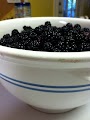
With praise for English priest/poet Gerard Manley Hopkins, "The world is charged with the grandeur of God. It flames out...." or bursts forth in sweet dark fruit: June blackberries.
Before church today, Penny and I visited a nearby blackberry patch, its whereabouts our secret, and picked a big bowl of fruit. Let me clarify. She picked the berries; I mostly ate them.
Ahh, God is good. Imagine Hopkins's poem, "The Grandeur of God," if only the poet had enjoyed a handful of ripe blueberries.
Or perhaps he did early one Sunday morning and, moved by their sweetness and simple beauty, penned his delicious poem.
Wednesday, June 6, 2012
Grady Sanford's life: revved up and roaring ahead, even now
Yesterday, I said goodbye to my friend Grady Sanford.
Christ Episcopal Church, Springfield, his former church, was crowded with family, friends, colleagues--people from many different communities whose lives had intersected with and been enriched by his life.

In the Prayer Book Burial Office, we celebrated Grady's life in this world and his life in the world to come.
As a Christian, I believe he lives eternally in the Communion of Saints, for as the apostle Paul writes in Romans, nothing can ever separate us from the love of God in Christ Jesus, not even death.
So, my goodbye to Grady is only goodbye for now.
Grady died too young. He was just 61 years of age when pancreatic cancer took him.
But he lived his too-few years--abundantly lived them--by his motto: "Seek the joy of being alive."
He retired some ten years ago, and he and his wife Carol moved from Springfield to California, where she entered seminary and began preparing for the priesthood.
Grady shared in and supported Carol's journey through seminary, to ordination, and finally to Kansas City, MO, where the two of them made a good life together.
He served in several ministries at Grace and Holy Trinity Cathedral, volunteered at an animal shelter, drove a bus (an early ambition fulfilled), worked at the boys' camp of his youth in Minnesota, and did much more.
And Grady rode his Harley Davidson motorcycle.
Perhaps he had read Zen and the Art of Motorcycle Maintenance, for he certainly lived the spirit of Robert Pirsig's classic on motorcyles, philosophy, and life.
Although I read the book in 1976, I still remember Pirsig's writing that he prefers riding his motorcycle to riding in an automobile. On his motorcycle, he feels the wind and rain on his face, but not when he's sealed off from the elements--and from life--by car windows.
How many of us put something between us and living? Not Grady.
When he lived and studied at the Church Divinity School of the Pacific, he used to ride his motorcycle around the Berkley Hills. He rode the way he lived his life--revved up and roaring ahead.
When my wife Penny and I first learned of Grady's illness, we prayed fervently for a miracle. His many friends surely did likewise.
Did God ignore our prayers? No. Despite Grady's decline and death, I still believe God answered our prayers, working a small--or great--miracle in his life.
Grady left hospital and went home, where he got to spend time with Carol, other family members, and friends; he got to reminisce and to laugh; he got to sit outside and feel the sun on his face; he got to say goodbye.
Would that Grady's time with us had been several decades longer, but thanks be to God, we had the time we did with him.
I'll always remember Grady for the gentle, humble, compassionate, and funny person he was.
I'll remember him for his faith in Christ and witness to him.
I'll remember him for the way he lived--daily seeking the joy of being alive, experiencing it, and sharing that joy with others.
May we all live in that same spirit--revved up and roaring ahead--all our days here.
Goodbye for now, dear Grady.
Tuesday, May 8, 2012
Bravo for "Blue Like Jazz"
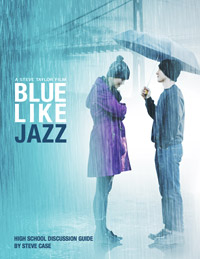
The movie tells the story of Don, a 19 year-old, and his journey from his evangelical Christian roots in Texas to the anti-God and anti-religious world of Reed College in Portland, Oregon.
The film's satirical swipes at Christianity brought lots of laughter from the audience, including from me, but then, about midway, a shift in tone occurred, when Don finally meets an actual committed Christian at Reed, and not a closeted one.
Penny, the "out" Christian, goes to church--apparently to an Episcopal Church--takes her faith in Christ seriously, and strives to live the life of love that Jesus lives and teaches as the way to life in abundance. Penny spends her Christmas break working with refugees in Kashmir.
She shows Don that it is possible to be a Christian authentically and with integrity, despite Don't own personal experience: Don has just learned that his mother is pregnant by his home church's married youth pastor, who had been his friend. Now, he sees for himself the hypocrisy of the supposedly religious and has all the more reason to join in the rejection of Christianity, so popular among the other college students.
Toward the end of the film, Don has an epiphany, aided by the loving witness of Penny. It takes place in a mock confessional, part of a week on campus of mock-everything-that-is-holy. He realizes that his mother is human, that she needs his love. Love is what true religion is about. Not condemning others who fail to love, but taking responsibility and loving others, as he had been taught for all those years in church.
"Blue Like Jazz" critiques both the wrongs of Christianity and the wrongs of secularism. It takes a lot of punches, too. In the latter case, secularists ridicule what they don't understand and reject what challenges their secure world view--that science, for instance, is the sole source of meaning and value. There's a terrific scene in the film where an atheist and a theist debate, Does God exist? Yes, he does, I could almost hear Don say.
More significantly, those who reject and condemn faith might do so because of deep hurt and disappointment. This is the case for the Pope, Don's friend at Reed, who has been chosen by the students to speak for God for the year. Ironically, the Pope is an atheist and is vehement in his attacks on God, Christianity, the church, and especially on the Roman Catholic Church, because as a child, he was raped by a priest in the sacristy. (The Pope and Don put a giant condom on a church steeple and post a sign that says, "Don't reproduce.")
I understand the Pope--of the film, that is. (The other one is a complete mystery to me.) In the Roman Catholic Church of my childhood and adolescence, I experienced deep and lasting physical and emotional abuse, although, thank God, never sexual abuse. As a consequence, I have great sympathy, even empathy, for people who have been hurt deeply by religious people--people who were supposed to show others the love of God in Jesus, but who hurt them instead. I understand why they reject the abusive institution. (Jesus knows something about being abused--crucified, actually--by religious people.) One reason I am a priest is to try to show others that God is love. To give God and his followers a good name.
At the end of the film, Don has come to reconsider his rejection of Christianity. Now, he's the new Pope, succeeding his friend. He speaks for God now. Don sits in his mock confessional, listening to the old Pope tell of the abuse he suffered in that sacristy, and Don says, "I'm sorry." And he goes on saying, "I'm sorry" for God to everyone who visits him in the confessional and has a story of hurt to tell.
Yes, Christians have done stupid and cruel things, and will likely go on doing them, because we're tragically flawed--imperfect. Don realizes this truth. He sees his own sin, I think.
Sinners though we are, God goes on loving all of us and hoping that one day we'll understand who God is--love; God tried to get that message across in his son. God goes on hoping that one day, even today, we'll start to live the way he wants us to live, which is the way of radical unconditional love.
God doesn't want to be blue forever, because of what we people who believe in him do to one another and to others. God thinks the best of us, that one day, we his children, will make God proud.
While the secularists at the movie version of Reed College and elsewhere sneer at all things and all people religious, this is one Christian who will go on trying to do his best for Christ, with the Spirit helping me; and saying, with Don, "I'm sorry" for my and others sins of omission and commission.
Monday, March 26, 2012
Hope for the hurting
I have read a lot about PTSD or post traumatic stress disorder--it's a particular interest of mine--and in the course of nearly every week, I meet someone who has experienced some profound physical, emotional or spiritual trauma--and, most often, all three. Sometimes, the people I meet are combat veterans of recent wars; others have survived rape and incest and other violent attacks.
I am moved by their stories and suffer with them. I want to take away their pain, but know that they have to work through the pain themselves and reconcile themselves to it somehow. It's a long and difficult process, and some people survive it, but others don't.
Yesterday, I read an encouraging article in the New York Times Sunday Magazine about people who are dealing with PTSD. The US Army has devoted some $25 million to caring for people with PTSD in the field and at home.
With the help of psychiatrists, psychologists, and researchers, among others, the Army has created a program for teaching soldiers how to develop "mental strength" or "resiliency" in surviving and even growing from the horrors of war. The program seems to be working.
One of the important discoveries is that PTSD can become Post Traumatic Stress Growth. This change happens when the traumatized person approaches the event--be it a roadside bombing and the loss of a limb or the death of a friend in combat-- as something from which he or she can learn and can grow, something that will help him or her become a stronger and better human being.
Yes, it sounds simple. But, no, it isn't. It's hard, painful, agonizing work.
The lessons that soldiers are learning today are similar to those that people in civilian life have been learning for a long time as they have confronted the traumas of sexual assaults, other violent acts, the tragic and sudden loss of loved ones, and much more.
Millennia ago, a man called Joseph learned the same lessons. Genesis tells the story of how Joseph was the favored son of his father, how his position in the family prompted his jealous brothers to plan to kill him, but then to sell him into slavery. Both bad and good things happen to Joseph in slavery and in Egypt.
Over many years, Joseph becomes second only to Pharaoh himself in power in Egypt. Joseph meets his brothers again. They have come to Egypt looking for food to feed their starving families, and Joseph, whom they don't recognize, treats them well and gives them food. When he reveals himself to his brothers, and they are astonished by his gracious treatment of them, Joseph says to them of the hurt they had done to him, "You meant it for evil, but God meant it for good."
Joseph is a resilient person. With God's help, he responds to the trauma of being betrayed by his brothers, becoming a generous and forgiving person, a savior of starving multitudes in his homeland.
As Joseph and as many people since then have discovered, tragic and traumatic things don't have to wreck us, but can raise us up to become more than the worst thing or things that have every happened to us.
I am moved by their stories and suffer with them. I want to take away their pain, but know that they have to work through the pain themselves and reconcile themselves to it somehow. It's a long and difficult process, and some people survive it, but others don't.
Yesterday, I read an encouraging article in the New York Times Sunday Magazine about people who are dealing with PTSD. The US Army has devoted some $25 million to caring for people with PTSD in the field and at home.
With the help of psychiatrists, psychologists, and researchers, among others, the Army has created a program for teaching soldiers how to develop "mental strength" or "resiliency" in surviving and even growing from the horrors of war. The program seems to be working.
One of the important discoveries is that PTSD can become Post Traumatic Stress Growth. This change happens when the traumatized person approaches the event--be it a roadside bombing and the loss of a limb or the death of a friend in combat-- as something from which he or she can learn and can grow, something that will help him or her become a stronger and better human being.
Yes, it sounds simple. But, no, it isn't. It's hard, painful, agonizing work.
The lessons that soldiers are learning today are similar to those that people in civilian life have been learning for a long time as they have confronted the traumas of sexual assaults, other violent acts, the tragic and sudden loss of loved ones, and much more.
Millennia ago, a man called Joseph learned the same lessons. Genesis tells the story of how Joseph was the favored son of his father, how his position in the family prompted his jealous brothers to plan to kill him, but then to sell him into slavery. Both bad and good things happen to Joseph in slavery and in Egypt.
Over many years, Joseph becomes second only to Pharaoh himself in power in Egypt. Joseph meets his brothers again. They have come to Egypt looking for food to feed their starving families, and Joseph, whom they don't recognize, treats them well and gives them food. When he reveals himself to his brothers, and they are astonished by his gracious treatment of them, Joseph says to them of the hurt they had done to him, "You meant it for evil, but God meant it for good."
Joseph is a resilient person. With God's help, he responds to the trauma of being betrayed by his brothers, becoming a generous and forgiving person, a savior of starving multitudes in his homeland.
As Joseph and as many people since then have discovered, tragic and traumatic things don't have to wreck us, but can raise us up to become more than the worst thing or things that have every happened to us.
Monday, March 5, 2012
Celebrating 25 years of priesthood
The people of Christ Episcopal Church, Springfield, MO, joined me yesterday, the Second Sunday of Lent, to celebrate the 25th anniversary of ordination to the priesthood.
My actual ordination date was the Feast of St. David, patron saint of Wales, March 1. On that date in 1997, Bishop David Reed of Kentucky ordained me to the priesthood at Christ Episcopal Church, Bowling Green, KY.
On my anniversary, I renewed my ordination vows at the Holy Eucharist at 9 am, which was followed by a beautiful reception in the parish hall.
I am grateful to the several parishioners who made it possible. They organized and publicized it. They set up the tables and spread the table cloths. They contributed the food and gorgeous spring flowers. They served the food and drinks and welcomed people.
As I said in my remarks in the parish hall, there have been many highs and lows over more than two decades of priesthood, but, on the whole, the former outweigh the latter.
Just the day before, I said, I started the morning watching four short films at the Moxie with a group of preschoolers from church. Afterwards, we worked on crafts in the lobby. It was fun. I love the energy of the children and helping to foster the Christian faith in them.
Then, later Saturday morning, I visited with high school students from throughout the diocese who were spending the weekend at Christ Church. They were taking part in Happening, a spiritual renewal experience.
I listened to a young woman's testimony about the importance of Christ in her life. (Later on at the closing Eucharist on Sunday afternoon, I was again moved, hearing participants share their experiences of Christ over the weekend.) It is a delight to see faith coming alive in the young.
These experiences are among the joys of being a priest, and I hold onto them. They are highs that help me endure the lows.
In his famous poem, Robert Frost writes of the "road not taken." A long time ago, I could have taken a different road--a military officer, a banker, a lawyer and politician, a journalist, a partner in the public relations firm (and I did take several of those roads for a time).
But priesthood was the road I chose ultimately, or rather, that chose me. God chose it for me and called me to walk it. I have done so now for more than two decades.
I trust that this is the road God created me to walk, and that when I reach the end of it--a long, long time from now, I pray--I will look back and say, "Thank God, I took this road. And thank God, I remained on it, for this road has led me into a life of purpose, value, and joy."
My actual ordination date was the Feast of St. David, patron saint of Wales, March 1. On that date in 1997, Bishop David Reed of Kentucky ordained me to the priesthood at Christ Episcopal Church, Bowling Green, KY.
On my anniversary, I renewed my ordination vows at the Holy Eucharist at 9 am, which was followed by a beautiful reception in the parish hall.
I am grateful to the several parishioners who made it possible. They organized and publicized it. They set up the tables and spread the table cloths. They contributed the food and gorgeous spring flowers. They served the food and drinks and welcomed people.
As I said in my remarks in the parish hall, there have been many highs and lows over more than two decades of priesthood, but, on the whole, the former outweigh the latter.
Just the day before, I said, I started the morning watching four short films at the Moxie with a group of preschoolers from church. Afterwards, we worked on crafts in the lobby. It was fun. I love the energy of the children and helping to foster the Christian faith in them.
Then, later Saturday morning, I visited with high school students from throughout the diocese who were spending the weekend at Christ Church. They were taking part in Happening, a spiritual renewal experience.
I listened to a young woman's testimony about the importance of Christ in her life. (Later on at the closing Eucharist on Sunday afternoon, I was again moved, hearing participants share their experiences of Christ over the weekend.) It is a delight to see faith coming alive in the young.
These experiences are among the joys of being a priest, and I hold onto them. They are highs that help me endure the lows.
In his famous poem, Robert Frost writes of the "road not taken." A long time ago, I could have taken a different road--a military officer, a banker, a lawyer and politician, a journalist, a partner in the public relations firm (and I did take several of those roads for a time).
But priesthood was the road I chose ultimately, or rather, that chose me. God chose it for me and called me to walk it. I have done so now for more than two decades.
I trust that this is the road God created me to walk, and that when I reach the end of it--a long, long time from now, I pray--I will look back and say, "Thank God, I took this road. And thank God, I remained on it, for this road has led me into a life of purpose, value, and joy."
Tuesday, February 7, 2012
Shhh
Penny and I sat in the dark cinema the other night, hoping people would settle down. They talked and laughed through the music, through the commercials and previews and, forebodingly, into the first seconds of the feature, "The Artist." We hoped the audience would settle down for the film, a silent one--and they did.
What is it about silence? Perhaps it is like a vacuum, and you know the saying: nature abhors a vacuum. And perhaps humans abhor silence. So, we pop in the ear buds and listen to music or the news as we exercise; we turn on the car radio and sing along; we wriggle in worship when there is one of those rare pauses.
We fill the silence, which is too bad. I like to be quiet. Perhaps it is because my Christian spirituality has been formed by the monastic tradition, which embraces silence and delights in it, because when there is silence, instead of my rushing in to fill it with words and sounds, or asking someone else to do the same, God will fill the silence for me with his presence.
His presence is sometimes a word-filled one--his words, not mine--or it may be a wordless presence, a feeling of deep peace or contentment or reasurrance. God knows what I need in the moment.
Early the other morning, as I was walking, I stopped thinking, stopped planning, even stopped praying. And I stilled my soul within me, as the psalmist puts it, and I let the silence of that new morning fill me up. As I drew the chilly air into my lungs, I imagined that I was breathing in the silence. And I did. With it came a deep and healing peace. And I was ready again for a world of words and sounds. And looking forward to the silence once more.
What is it about silence? Perhaps it is like a vacuum, and you know the saying: nature abhors a vacuum. And perhaps humans abhor silence. So, we pop in the ear buds and listen to music or the news as we exercise; we turn on the car radio and sing along; we wriggle in worship when there is one of those rare pauses.
We fill the silence, which is too bad. I like to be quiet. Perhaps it is because my Christian spirituality has been formed by the monastic tradition, which embraces silence and delights in it, because when there is silence, instead of my rushing in to fill it with words and sounds, or asking someone else to do the same, God will fill the silence for me with his presence.
His presence is sometimes a word-filled one--his words, not mine--or it may be a wordless presence, a feeling of deep peace or contentment or reasurrance. God knows what I need in the moment.
Early the other morning, as I was walking, I stopped thinking, stopped planning, even stopped praying. And I stilled my soul within me, as the psalmist puts it, and I let the silence of that new morning fill me up. As I drew the chilly air into my lungs, I imagined that I was breathing in the silence. And I did. With it came a deep and healing peace. And I was ready again for a world of words and sounds. And looking forward to the silence once more.
Subscribe to:
Posts (Atom)